
Rappahannock Tribe Rematriates an Additional 704 Acres of Land at Fones Cliffs
Richmond County, Virginia – On Friday, June 12, 2026, the Rappahannock Tribe rematriated 704 acres of historic land at Fones Cliffs on the Rappahannock River. Fones Cliffs is part of the ancestral homeland of the Rappahannock Tribe and has been designated by the National Audubon Society as an Important Bird Area with global significance for bald eagles and other migratory birds.
The acquisition of these 704 acres increases the Tribe’s stewardship of land at Fones Cliffs to a total of 2,391 acres. This includes land the Tribe co-stewards through partnership with the Rappahannock River Valley National Wildlife Refuge, as well as land that has been regained between 2017 and 2026, totaling 2,139 acres. The newly acquired land, mostly comprised of forest and deep ravines, was purchased from the Chesapeake Conservancy with support from federal funding, the Virginia Land Conservation Foundation and The Conservation Alliance.
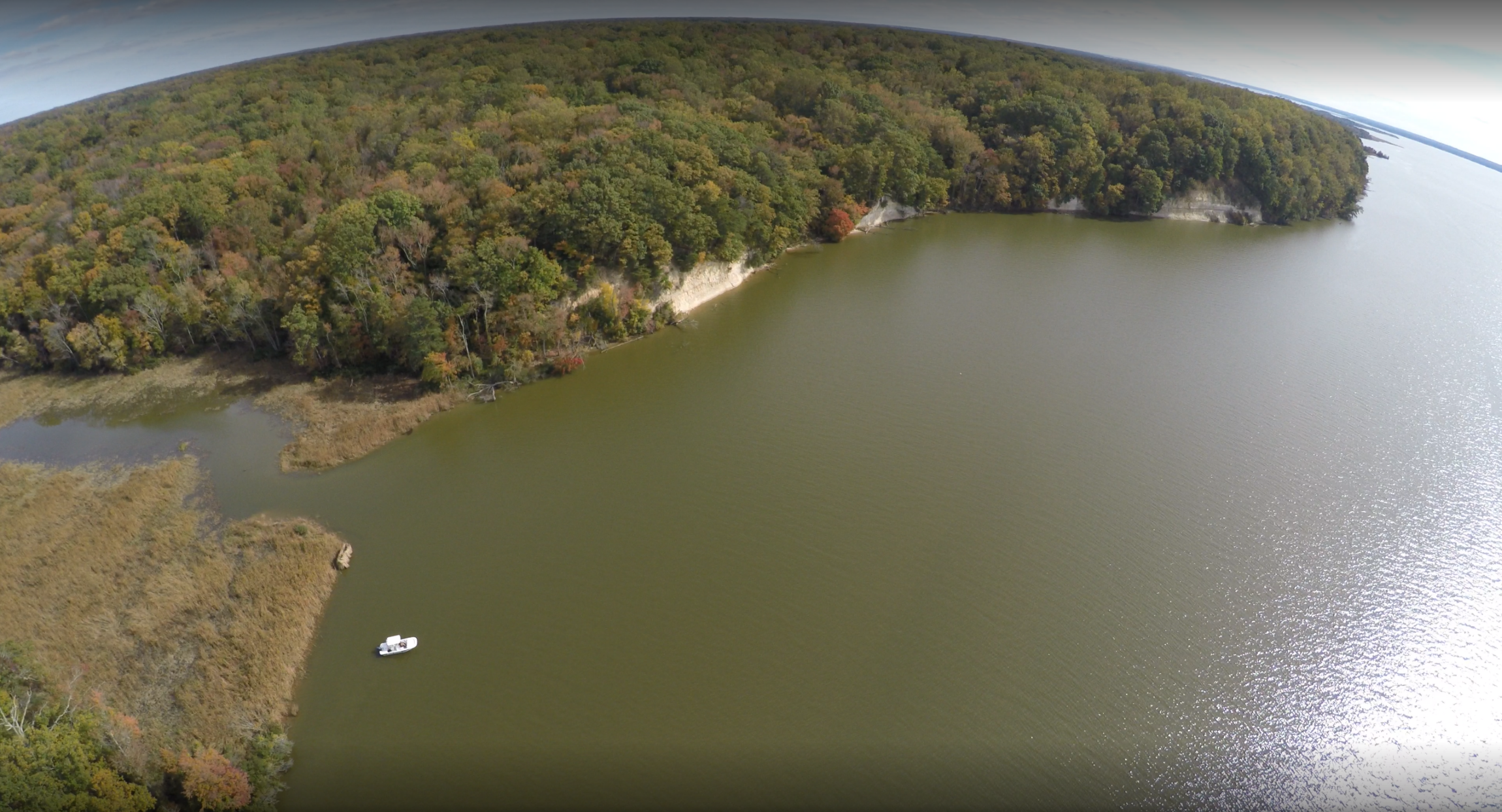
Photo by Jeffrey Allenby/Chesapeake Conservancy
The rematriated land is protected in perpetuity through conservation easements held by the U.S. Fish and Wildlife Service, with the Tribe serving as co-steward incorporating traditional ecological knowledge. Within this landscape, two parcels have easement exceptions totaling approximately 38 acres, allowing the Tribe to build structures for tourism and tribal use.
While the return of this land is a historic milestone for the Tribe, it is part of a much larger story.
Fones Cliffs itself is a four-mile stretch of land rising 100 feet above the Rappahannock River Valley. For generations, this was home to the Rappahannock people and three of their fourteen historic towns: Pissacoack, Matchopick and Wecuppom. The high ground of the cliffs provided expansive views up and down the river and served as a place of protection for the Rappahannocks. In the summer of 1608, when Captain John Smith mapped the Rappahannock River, the Tribe used the cliffs to their advantage to defend their homeland against English invasion.
By the 1650s, the Tribe’s connection to the cliffs was severed for the Tribe. Settler colonists claimed Rappahannock land, without payment, destroying tribal towns and forcing the Rappahannock people to abandon their ancestral homeland on the Northern Neck. Pushed off the River, the Tribe relocated to their hunting grounds on the Middle Peninsula, along the ridge between the Rappahannock and Mattaponi rivers, where the Tribe is headquartered today.
Chief Anne Richardson said, “For millennia, the power of this place has shaped tribal identity and connected the people to the land and to the river that bears our name. It is very rewarding to be able to restore the lands of our ancestors to our citizens of today and for future generations.”
“This rematriation reflects what true partnership looks like when many hands and hearts come together and work tirelessly over time. Inspired and guided by Chief Anne Richardson and the citizens of the Rappahannock Tribe, this work honors the enduring spirit of a people who are the true stewards of these lands,” said Chesapeake Conservancy CEO Susan Shingledecker. “As the nation marks its 250th anniversary, there is something profoundly fitting about this moment. The Tribe will once again steward its ancestral homeland in perpetuity. I am grateful to donors, funders, conservation nonprofits and government partners whose support made this work possible over many years.”
“It has been an honor to support the Rappahannock Tribe, USFWS and the Chesapeake Conservancy in the quest to preserve thousands of acres at Fones Cliffs. We are confident that under the joint management of the Tribe and USFWS, the environmental, historical and cultural assets at Fones Cliffs will yield untold returns for generations to come,” said Richard Remmer with the Dr. William Dodge Angle Conservation Office.
The First Acre
In 2017, the Tribe took its first step in the Land Back movement with a single acre on Carter’s Wharf Road. The one-acre parcel was gifted to the Tribe by the Chesapeake Conservancy through the generosity of former U.S. Senator John Warner and his daughter, Virginia.
Matchopick
In June 2019, partners gathered to celebrate the permanent protection of 252 acres at Fones Cliffs. The land was added to the Rappahannock River Valley National Wildlife Refuge through the collaborative efforts of The Conservation Fund and the U.S. Fish and Wildlife Service. Today, the Tribe co-stewards this parcel and refers to it by its original name, Matchopick.
Pissacoack
In April 2022, the Tribe rematriated 465 acres of ancestral land donated by the family of the late William Dodge Angle, M.D. through the Chesapeake Conservancy. This would become the first historic town, Pissacoack, that the Tribe reclaimed since the 1650s. These newly conserved 704 acres are considered to be the second phase of Pissacoack rematriation.
Wecuppom
In 2025, the Tribe acquired an additional 969 acres, which included the ancestral town of Wecuppom, through a purchase from The Conservation Fund.
“The research at Fones Cliffs has been a model of reciprocal collaboration between academics and tribal citizens. This important work has uncovered the presence and rich history of the Rappahannocks in their three towns at Fones Cliffs,” said Tribal Historic Preservation Officer Dr. Edward Ragan.
Today, archaeologists, historians, and elders are piecing together the history of the Rappahannock Tribe. Through the rematriation of these 704 acres, the Rappahannock story continues to be restored. The Rappahannock Tribe has plans for tourism, education and Indigenous-led conservation to preserve and protect land that was once theirs.
Land Acknowledgement
In the spirit of respect and acknowledgment, we recognize that the Rappahannock River Valley is characterized by deep-rooted traditions and rich history that is woven into the fabric of this region. As we engage with the land today, we honor and acknowledge the Rappahannock people who have nurtured this space long before us. The Rappahannock River Valley is not merely historical, it is alive in our stories, songs, and spiritual practices that embody the wisdom of generations who have walked this very ground.


